It’s Not Just About Scheduling: How Online Whiteboards Helped Me Actually Stick to My Time Blocks
Ever feel like your day slips away before you’ve done what matters most? I used to juggle tasks in chaos—until I started using online whiteboards not for meetings, but for myself. This isn’t about fancy diagrams or team collaboration. It’s about how a simple digital space helped me finally block time with clarity, stay focused, and reclaim my energy. If you’ve ever tried time blocking and gave up because it felt rigid or unrealistic—this is for you. What I discovered wasn’t just a better planner. It was a new way of seeing my time, my priorities, and even myself.
The Myth of Perfect Productivity
Let’s be honest—how many of us have fallen into the trap of thinking productivity means doing more, faster? I certainly did. For years, I believed that if I could just organize my to-do list better, wake up earlier, or squeeze in one more task before dinner, I’d finally feel on top of things. I downloaded every app, tried every method: bullet journals, color-coded planners, time trackers. But no matter how neatly I wrote things down, I still felt overwhelmed. By 3 p.m., I’d be staring at my screen, mentally exhausted, with half my list untouched.
And then came the guilt. Why couldn’t I keep up? Was I lazy? Not disciplined enough? I started questioning my worth, not realizing I was measuring myself against a broken standard. The truth is, productivity isn’t about speed or volume. It’s about presence. It’s about showing up for the things that matter—your work, your family, your own growth—with focus and care. But how do you do that when your days feel like they’re running you instead of the other way around?
What I needed wasn’t another checklist. I needed a shift in mindset—and a tool that supported it. I wasn’t looking for perfection. I wanted something that felt real, something that made space for interruptions, energy dips, and the unexpected moments that life throws at you. That’s when I stopped chasing efficiency and started looking for intention. And that’s when I found a surprising ally: the online whiteboard.
Discovering a Different Kind of Tool
I’ll admit it—I didn’t discover online whiteboards for personal planning. I first used them at work, during virtual team sessions. We’d brainstorm ideas, map out projects, and organize thoughts with sticky notes and freeform sketches. It felt creative, open-ended. But I never thought to use one for my own time—until one quiet Sunday morning.
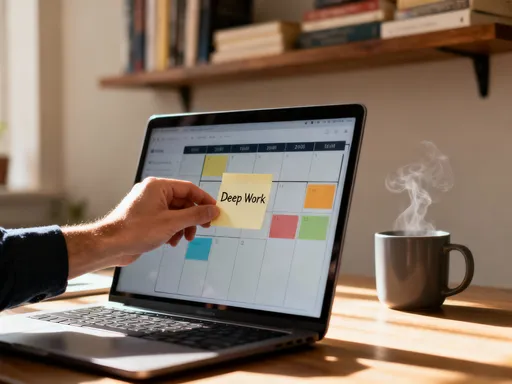
I was trying to plan my week the usual way: typing tasks into a calendar, assigning times, feeling the familiar dread as my schedule filled up like a prison sentence. Then, on a whim, I opened a blank whiteboard. I dragged a sticky note to the top left and wrote: “Deep Work – 9–11 AM”. Then another: “Call Mom – 4 PM”. And just like that, something felt different.
Instead of time slots crammed into a grid, I could see my day unfold across a spacious canvas. I could group related tasks, leave little reminders, even draw a tiny sun next to the hours I usually feel most alert. It wasn’t rigid. It wasn’t cold. It felt alive. That morning, I didn’t just plan my week—I designed it. And for the first time, it didn’t feel like a chore.
The visual freedom was the game-changer. Calendars show time as a series of boxes. Whiteboards show time as a landscape—one you can shape. I began experimenting. I used different colors for different types of energy: blue for focused work, green for family time, yellow for learning. I added small icons: a coffee cup for when I’d need a boost, a heart for moments I wanted to savor. Slowly, my relationship with time began to change. It wasn’t something I was fighting against. It was something I was partnering with.
Why Time Blocking Fails (And How Whiteboards Fix It)
If you’ve ever tried time blocking and given up, you’re not alone. Most people do. And it’s not because they lack discipline—it’s because traditional methods don’t account for real life. Calendars are great for appointments, but they’re terrible at showing context. When you see “Work – 10–12 AM,” what does that even mean? Are you writing? Answering emails? In back-to-back meetings? Without context, time blocks become meaningless.
And then there’s the rigidity. Life isn’t linear. Some days, you’re energized and can power through a task in half the time. Other days, you’re tired, distracted, or dealing with a surprise school pickup. When your calendar doesn’t allow for that, you either abandon the plan or beat yourself up for not sticking to it. Either way, you lose.
Online whiteboards fix this by making time blocking flexible and visual. Instead of locking yourself into a fixed grid, you can drag, resize, and reorganize blocks as needed. If a task takes longer, you stretch the block. If you need to pause for a family moment, you shift things around—no guilt, no frustration. The board becomes a reflection of your day, not a dictator of it.
But the real power is in the details. On my whiteboard, I don’t just write “Work.” I write “Finish quarterly report – draft section 3.” I add a note: “Use noise-canceling headphones.” I color-code it based on energy level. This turns a vague block into a clear, actionable plan. And because I can see it all at once, I notice patterns. I see when I’m overloading mornings. I notice when I’ve forgotten to schedule downtime. The whiteboard doesn’t just help me plan—it helps me understand my rhythm.
Building a Living Schedule That Breathes
One of the most freeing things I’ve learned is that a good schedule doesn’t have to be perfect—it just has to be kind. My whiteboard isn’t a rigid blueprint. It’s a living document that changes with me. Every morning, I spend about five minutes with it. I look at what’s ahead, adjust blocks based on how I’m feeling, and add little symbols that ground me.
For example, if I know I’m low on energy, I’ll add a small moon in the corner of my deep work block—my reminder to go slow, take breaks, and not expect superhuman focus. If it’s a day when my daughter has soccer practice, I’ll draw a tiny ball next to “Pick up – 5:30 PM” so it stands out. These small touches make the board feel personal, not robotic.
I’ve also stopped using templates. Early on, I tried fancy layouts with columns and grids, but they felt too structured. Now, I keep it simple: a blank canvas, sticky notes, freehand lines. I group related tasks together—like putting all my writing blocks in one cluster, or placing family time in a warm corner of the board. I use colors intuitively: soft blues for calm focus, warm oranges for creative energy, greens for connection.
The key is that it’s mine. No one else needs to understand it. It’s not for presentation. It’s for presence. And because it’s so easy to update, I don’t fear change. If something comes up, I move blocks around like puzzle pieces. If I finish early, I add a “bonus block” for something I’ve been putting off—like calling a friend or reading a chapter of a book. The board doesn’t punish me for life happening. It helps me flow with it.
Connecting Time to Growth, Not Just Tasks
Here’s the shift that changed everything: I stopped labeling my blocks by what I was doing and started labeling them by why I was doing it. Instead of “Answer emails,” I wrote “Clear mental space.” Instead of “Gym,” I wrote “Recharge my energy.” And instead of “Work on project,” I wrote “Create something meaningful.”
This small change transformed how I saw my time. It wasn’t just about getting things done anymore. It was about growing, learning, and showing up as the person I wanted to be. I started adding blocks I never would have scheduled before: “Learn something new,” “Reflect on the week,” “Just breathe for 10 minutes.” These weren’t “productive” in the traditional sense—but they were essential.
The whiteboard made it easy to protect that space. When I see “Grow – 30 min” on my board, I treat it with the same respect as a doctor’s appointment. It’s not optional. It’s part of my well-being. And over time, something beautiful happened: I started feeling more confident. Not because I was doing more, but because I was investing in myself. I was learning, creating, and reflecting—on purpose.
And here’s the thing: when you make space for growth, the rest of life gets easier. Tasks don’t feel as heavy. Decisions feel clearer. You start to trust yourself. The whiteboard didn’t just help me manage time—it helped me build a life that feels aligned, one block at a time.
Sharing the Board: When Planning Becomes Connection
I never expected my whiteboard to become a tool for connection. But a few months ago, I showed part of it to my partner—not the work stuff, but my personal blocks. He saw “Date night – 7 PM” and “Walk together – 20 min” and said, “Wait, can we plan our weekends like this too?”
So we did. We created a shared board just for family life. No pressure, no perfection. Just a space to see our week together. We add blocks for weekend hikes, grocery runs, quiet mornings with coffee. We use little icons: a star for special plans, a book for reading time, a heart for moments we want to be fully present.
What surprised me most was how much it reduced friction. Before, we’d often double-book or forget who was picking up the kids. Now, we can both see the big picture. If he sees I’ve blocked “Me time – 1 hour,” he knows not to interrupt. If I see he’s scheduled “Fix the sink,” I know to give him space. It’s not about control. It’s about care.
And sometimes, we just sit together and plan. We talk about what we’re looking forward to, what we need more of, what we can let go of. It’s become a ritual—a small act of love. The board doesn’t replace conversation. It makes space for it. And in a busy household, that’s priceless.
Beyond the Screen: A Calmer, More Intentional Life
Using an online whiteboard this way didn’t just change how I plan. It changed how I live. I’m less reactive. I’m more present. I don’t feel like I’m constantly chasing the next task. Instead, I feel like I’m guiding my day, not being dragged through it.
And the best part? It’s not about being perfect. Some days, I still fall behind. Some days, I forget to check the board until evening. But instead of frustration, I feel curiosity. I ask myself: What happened? What did I need that I didn’t plan for? The board isn’t a judge. It’s a mirror.
Over time, I’ve learned to design my time with more kindness. I schedule breaks before I feel tired. I protect space for joy before it gets crowded out. I plan for energy, not just efficiency. And because I can see it all in one place, I make better choices. I say no more often. I let go of guilt. I trust my rhythm.
This isn’t about technology. It’s about intention. The whiteboard is just a tool—a simple, flexible, visual way to bring clarity to your days. But what it really offers is something deeper: the chance to live on purpose. To show up for your work, your family, and yourself—not out of obligation, but out of care.
If you’ve ever felt like your time isn’t yours, I invite you to try this. Open a blank whiteboard. Drag a sticky note. Write one thing that matters. See how it feels to design your day, not just endure it. You might just discover that the most powerful tool for a calmer, more intentional life was waiting for you all along—right on your screen.