From Page-Turner to Life-Changer: How My E-Reader Quietly Transformed My Days
You know that feeling when you finally find the one thing that just fits into your life—no fuss, no learning curve, just ease? For me, it was my e-reader. Not flashy, not loud, but somehow it reshaped how I read, how I rest, even how I parent. Over years of late-night stories, morning pages, and stolen moments between tasks, it became less of a gadget and more of a quiet companion. This isn’t about specs or brands—it’s about how a simple device helped me reclaim time, focus, and joy, one chapter at a time.
The Cluttered Life That Almost Missed Reading
I used to love books—real, heavy, beautiful ones. I had shelves full of them, each spine a promise of escape, knowledge, or comfort. But somewhere between school drop-offs, work deadlines, and the constant hum of household chores, those books stopped being companions and started feeling like silent judges. My nightstand became a guilt pile: a novel I’d read three pages of, a biography I meant to finish last winter, a yoga guide now stained with chamomile tea. I missed reading—truly missed it—but I couldn’t figure out how to make space for it. It wasn’t just time; it was physical space, mental space, emotional space. Carrying a book in my bag felt like lugging around a brick of good intentions I’d never act on.
And then, one rainy afternoon while waiting for my daughter’s piano lesson, I noticed a friend pulling a slim, light device from her purse. She smiled and said, “This is how I read now.” I remember thinking, Isn’t that cheating? Isn’t reading supposed to be paper and ink and the smell of pages? But curiosity got the better of me. I asked her about it—how it felt, whether it hurt her eyes, if she still enjoyed it. Her answer surprised me: “It’s not about replacing books,” she said. “It’s about making reading possible again.” That phrase stuck with me. Not replacement. Possibility. A few weeks later, I bought my first e-reader. I didn’t realize it then, but that small, unassuming device would become one of the most meaningful tools in my life—not because it was high-tech, but because it was right for my life.
The First Real Shift: Reading Without the Weight
The first thing I noticed was the lightness—literally. I could hold it in one hand, toss it into my tote without worrying about bulk or balance. No more choosing between a library book, my planner, and a water bottle just to make room. But the real shift wasn’t physical; it was psychological. For the first time in years, I stopped managing books and started actually reading them. I used to agonize over which book to take on a trip—would I finish it? Was it too long? Too serious? Too frivolous? Now, I could pack ten books and still have room for snacks and sunscreen.
But the real magic happened in the in-between moments. The five-minute wait at the pharmacy. The ten minutes before a meeting starts. The twenty minutes my son spent finishing a math worksheet at the kitchen table. Before, those gaps were filled with mindless scrolling—endless photos, videos, news snippets that left me feeling more scattered than satisfied. Now, I had something meaningful to do. I could open my e-reader and dive into a story, learn something new, or just rest my eyes on words instead of flashing screens. The barrier between “I don’t have time to read” and “I’m reading” simply vanished. It wasn’t that I had more time—it was that I could use the time I already had.
And here’s the thing: it didn’t feel like a compromise. I was worried I’d miss the tactile feel of paper, the way a book ages with you. But what I gained—access, flexibility, peace—far outweighed what I thought I’d lost. I realized reading wasn’t about the object; it was about the experience. And that experience was now easier, more consistent, and more joyful than it had been in years.
Task Completion, Not Just Distraction
One of the most unexpected benefits of using my e-reader was how it changed my relationship with time and accomplishment. I started to see reading not as a luxury or a distraction, but as a form of quiet productivity. Finishing a book—whether it took me three days or three weeks—felt like completing a meaningful task. Not because I was checking off a goal for the sake of it, but because I had truly absorbed something, grown a little, or been moved in some way.
Think about it: when was the last time you scrolled through social media and felt a deep sense of fulfillment? For me, it was never. Sure, I’d laugh at a funny post or feel a quick spike of curiosity, but more often than not, I’d close the app feeling drained, distracted, or even a little guilty. With my e-reader, it was the opposite. I’d finish a chapter and feel calmer, more centered, more myself. It became a form of mental hygiene—like brushing my teeth, but for my brain.
I began to notice how reading helped me process my thoughts. After a chaotic day, sinking into a novel felt like stepping into a warm bath. The words created a buffer between me and the noise of the world. And because the e-reader had no notifications, no pop-ups, no autoplay videos, I could actually stay in that space. No pings pulling me away. No ads flashing in the corner. Just me and the story. That uninterrupted focus was rare—and precious.
Over time, I started to treat reading like a non-negotiable part of my day, just like making breakfast or folding laundry. Not because I had to, but because it made everything else better. When I read regularly, I was more patient with my kids, more present in conversations, more creative at work. It wasn’t just about the books—I was building a habit of stillness, of depth, of intention. And that, I realized, was the real gift.
Family Moments, Reimagined
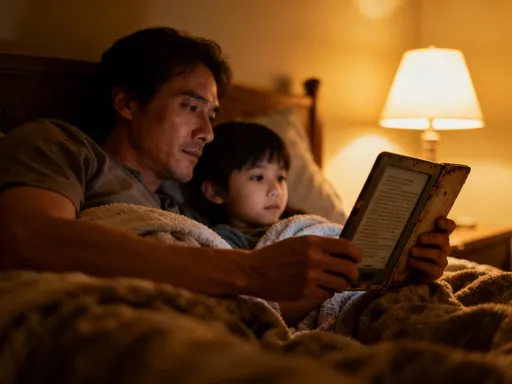
One of the sweetest surprises was how the e-reader became part of our family life. Bedtime used to be a balancing act—me holding a heavy picture book while one child squirmed and the other asked, “What does enormous mean?” Now, I could adjust the font size so both kids could see, tap a word to hear its definition, and switch between stories with a simple swipe. No more dog-earing pages or losing bookmarks. And the soft front light meant we could read in near-darkness without waking the baby down the hall.
But it wasn’t just bedtime. On rainy afternoons, I’d find my daughter curled up on the couch with the e-reader, exploring chapter books she’d picked out herself. No pressure from me, no “you should read this.” Just her, discovering stories at her own pace. One day, she looked up and said, “Mom, this book is so good. Can we talk about it after dinner?” That moment—her seeking me out to share what she’d read—was everything I’d ever hoped for as a parent.
And then there was my teenager. I’ll admit, I worried she’d never develop a love for reading. Between schoolwork, social media, and extracurriculars, books seemed like just another chore. But one evening, I walked past her room and saw her under the covers, the soft glow of the e-reader in her hands. I peeked—she was reading a novel I’d loved in high school. I didn’t say anything. I just smiled and walked away, heart full. The e-reader hadn’t replaced our conversations about books—it had made space for them to happen naturally, without pressure or persuasion.
It became a quiet bridge between us. We’d leave notes in the margins of shared books, recommend titles to each other, even start a little family book club during summer vacation. It wasn’t fancy, but it was real. And in a world where family time often feels scheduled or forced, that kind of organic connection was priceless.
Learning Without Pressure
I’ve always wanted to be someone who reads more—more history, more science, more poetry. But the truth is, I used to feel intimidated. I’d pick up a dense biography or a book on economics and think, I don’t have the brain for this. Or worse, I don’t have the time to look up every word I don’t know. The e-reader changed that. With a simple tap, I could see the definition of a word, hear it pronounced, even translate it if it was in another language. No more flipping to a glossary or pulling out my phone to search. The learning happened in the moment, seamlessly.
I started small. A short book on mindfulness. A collection of modern poetry. Then, I moved to heavier topics—climate change, women’s history, the science of habit formation. And because I could pair my reading with audiobooks—listening during walks or while folding laundry—I absorbed more than I ever thought possible. One week, I’d read a chapter on renewable energy in the morning, then listen to a podcast on the same topic while driving to pick up groceries. The layers of understanding built up quietly, naturally.
What surprised me most was how reading began to spark real conversations. I’d read a memoir about a woman rebuilding her life after loss, and it reminded me of a friend going through something similar. I sent her a message: “I just read this book—thought of you.” We ended up talking for an hour, not about the book, but about life, grief, resilience. The book wasn’t the point; it was the doorway.
And that’s when I realized: knowledge doesn’t have to feel like homework. It can feel like connection, like curiosity, like growth. The e-reader didn’t make me smarter—it made learning accessible. It removed the barriers of fear, time, and effort that had kept me from exploring the things I truly cared about. And in doing so, it helped me become more thoughtful, more informed, and more open-hearted.
The Quiet Power of Focus in a Noisy World
Let’s be honest—our world is loud. Notifications ping every few minutes. Emails demand attention. Social media scrolls endlessly. Even our smart speakers chime in with reminders and weather updates. In the middle of all that noise, the e-reader is an oasis of silence. No alerts. No updates. No suggested videos. Just text on a calm, glare-free screen. At first, that simplicity felt strange—almost too quiet. But within days, I noticed something: my brain started to settle.
I could read for longer stretches without feeling restless. I began to remember what I’d read, not just skim and forget. My thoughts felt clearer, more connected. It wasn’t that the e-reader was doing something magical—it was that it was not doing all the things that distract us. It was designed for one purpose: to help you read. And in that focus, I found a kind of mental reset I hadn’t known I needed.
But the benefits didn’t stop at reading. That ability to focus began to spill over into other parts of my life. I started eating meals without my phone on the table. I took walks without headphones, just listening to the world around me. I worked on projects with fewer interruptions, closing tabs and silencing alerts the way I’d close a book when I was done. I wasn’t just reading more—I was paying attention more.
There’s a word for this: intentionality. The e-reader taught me how to be intentional with my time, my attention, my energy. It didn’t demand anything from me. It didn’t pull me in ten directions. It just waited, quietly, for me to show up. And in a world that constantly asks us to multitask, to react, to consume—being able to choose depth over distraction felt like a quiet rebellion.
A Companion for the Long Haul
Years have passed since I bought that first e-reader. It’s scratched. The cover is frayed. But it still works—perfectly. No software updates broke it. No new model made it obsolete. It’s weathered moves across states, spills on the couch, and countless stories—from thrillers to poetry, from parenting guides to travel memoirs. It’s been with me through joy, grief, boredom, and breakthroughs. It’s held the books that made me laugh out loud and the ones that made me cry in public.
I still love physical books. I still visit bookstores, run my fingers over spines, and buy hardcovers as gifts. But my e-reader didn’t replace those experiences—it expanded them. It made reading possible when life was too full, too messy, too busy. It didn’t ask for upgrades. It didn’t need charging every few hours. It just showed up, day after day, ready to serve.
And in a world obsessed with the next big thing, that kind of reliability feels revolutionary. We’re told to chase novelty, to upgrade, to optimize. But sometimes, what we really need is something steady. Something that fits. Something that helps us be more present, more thoughtful, more us.
So if you’ve been thinking about giving reading another try—if you’ve missed the way a good story can wrap around you like a blanket—consider this your gentle nudge. You don’t need more time. You don’t need a perfect schedule. You just need a way to make reading possible again. And for me, that way was an e-reader. Not flashy. Not loud. But faithful, quiet, and full of grace. One chapter at a time, it helped me reclaim not just reading—but myself.