How I Turned Market Chaos Into Steady Gains — A Pro’s Playbook
Ever felt like the stock market rewards everyone but you? I’ve been there — watching rallies from the sidelines, chasing hot tips, only to lose ground. After years of trial and error, I cracked a method that prioritizes consistent return optimization over risky gambles. It’s not about hitting home runs; it’s about getting on base every time. Here’s how I redefined my strategy to build resilience, capture upside, and sleep well at night — no hype, just practical steps that actually work.
The Wake-Up Call: When My Portfolio Crashed
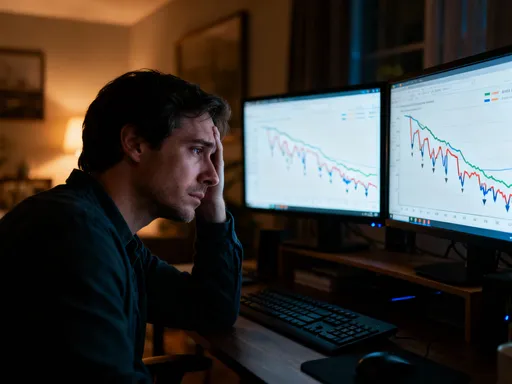
It started with confidence — too much of it. In 2018, I believed I had cracked the code. I was picking individual stocks based on headlines, analyst upgrades, and gut instinct. My portfolio was concentrated in high-flying tech names and speculative biotech plays, each purchase justified by the hope of rapid appreciation. For a while, it worked. Returns climbed, my confidence soared, and I began to think of myself as a savvy investor rather than a cautious saver. But then came the market correction in the fourth quarter. The S&P 500 dropped nearly 20%, and my portfolio fell by over 35%. While the broader market eventually recovered, my losses took much longer to rebound — not because the economy collapsed, but because my strategy had no margin for error.
That experience was humbling. I had ignored the fundamentals of sound investing: diversification, risk tolerance alignment, and emotional discipline. I wasn’t managing a portfolio; I was placing bets. The realization hit hard — if I wanted sustainable growth, I needed a system, not a series of lucky guesses. I began studying long-term investment frameworks used by professionals: asset allocation models, risk-adjusted return metrics, and behavioral finance principles. What emerged wasn’t a shortcut, but a complete shift in mindset. Instead of asking, “Which stock will double next year?” I started asking, “How can I protect my capital while still participating in market gains?” This shift marked the beginning of a more structured, thoughtful approach to investing — one focused not on excitement, but on consistency.
The crash taught me that volatility isn’t the enemy — poor preparation is. Markets will always fluctuate; that’s their nature. The real danger lies in being unprepared for those swings, both financially and psychologically. By overexposing myself to aggressive positions, I had set myself up for emotional decision-making when fear struck. Now, I measure success not by peak performance during bull markets, but by how well my portfolio holds up during downturns. That resilience is the foundation of long-term wealth building, and it starts with acknowledging past mistakes rather than rationalizing them.
Rethinking Returns: Beyond Chasing Stock Winners
For many investors, the definition of a successful investment is simple: the stock goes up. But this narrow view overlooks a critical truth — preserving capital is just as important as capturing gains. True return optimization isn’t about finding the next big winner; it’s about structuring your portfolio so that compounding works in your favor over time. Consider this: a 50% loss requires a 100% gain just to break even. That imbalance reveals why avoiding large drawdowns is essential to long-term growth. An investor who earns steady 8% annual returns will outperform one who alternates between +30% and -20% years, even though the average seems higher in the latter case.
I learned this through painful experience. After my portfolio crash, I analyzed my historical performance and discovered that most of my long-term underperformance stemmed not from missed opportunities, but from recoverable losses I failed to prevent. I had been chasing momentum without understanding its risks. Once I shifted my focus from “how high can it go?” to “how much can I afford to lose?”, my investment philosophy changed fundamentally. I began evaluating every potential investment not just on its upside potential, but on its risk-reward profile. This meant accepting smaller gains in exchange for greater stability — a trade-off that, over time, proved far more effective.
One powerful concept that reshaped my thinking was risk-adjusted return. Instead of measuring performance solely by percentage gains, I started using tools like the Sharpe ratio — a metric that evaluates returns relative to volatility. This helped me compare investments more objectively. For example, two funds might both deliver 10% annual returns, but if one achieves it with half the volatility of the other, it’s the superior choice for long-term compounding. By prioritizing consistency over heroics, I was able to design a portfolio that grew steadily, even during turbulent periods. The result? Fewer sleepless nights, fewer panic-driven trades, and better outcomes.
Building Your Core: The Power of Strategic Allocation
If there’s one decision that has the greatest impact on long-term investment success, it’s asset allocation. Studies, including landmark research from Vanguard, show that over 80% of portfolio returns are attributable to asset allocation — the way you divide your investments among stocks, bonds, real estate, and cash — rather than individual stock picks or market timing. Recognizing this, I rebuilt my portfolio around a core-satellite strategy, a model widely used by institutional investors and financial advisors.
The core makes up about 70% of my portfolio and consists of broad-market, low-cost index funds. These include a total U.S. stock market fund, an international developed markets fund, and a diversified bond index. This foundation provides instant diversification, keeps fees low, and ensures I’m always participating in global economic growth. Because these holdings are passive and broadly representative, they’re less vulnerable to single-company failures or sector-specific downturns. They also require minimal maintenance — I don’t need to constantly monitor earnings reports or analyst ratings. The core acts as an anchor, providing stability regardless of market noise.
The remaining 30% — the satellite portion — allows for more targeted exposure. Here, I allocate to individual stocks, sector-specific ETFs, and dividend growth funds that meet strict criteria. Unlike before, these positions are not speculative. Each must pass a set of filters related to financial health, competitive advantage, and valuation. The satellite component gives me the opportunity to enhance returns without jeopardizing the integrity of the whole portfolio. If one satellite holding underperforms, the impact is limited because it’s a smaller portion of the total.
This structure also simplifies rebalancing. Once a quarter, I review my allocation and adjust back to target percentages. If stocks have outperformed bonds, I sell a portion of equities and buy bonds — effectively “selling high and buying low” in a disciplined, automated way. This process removes emotion from decision-making and ensures I’m not drifting into higher risk simply because markets have risen. Over time, this systematic approach has led to smoother performance and better long-term results.
Risk Control as a Growth Tool — Not Just a Shield
Many investors treat risk management like an insurance policy — something they pay for but hope never to use. But I’ve come to see it differently. Effective risk control isn’t just about avoiding losses; it’s about creating the conditions for long-term growth. When you limit downside risk, you preserve capital that can continue compounding. You also protect your psychological well-being, which is just as important as financial health. Fear and stress lead to poor decisions — selling at the bottom, chasing trends, or abandoning a strategy mid-cycle. By building risk controls into my process, I’ve created a system that allows me to stay invested through volatility, which is where real wealth is built.
One of the most effective tools I use is position sizing. I never allow any single investment to exceed 5% of my total portfolio. This cap ensures that even if a stock goes to zero, the overall damage is contained. It also forces me to think critically before adding new positions — I have to justify not just the investment thesis, but its appropriate weight. This discipline prevents overconcentration and keeps emotions in check. When a holding performs well and grows beyond 5%, I rebalance by selling a portion, locking in gains and maintaining balance.
I also employ stop-loss disciplines, though not in the rigid way some traders do. Instead of setting automatic sell orders at fixed percentages, I use trailing stops based on volatility and support levels. For example, if a stock rises 20%, I might set a trailing stop at 15% below its peak, allowing room for normal fluctuations while protecting against sharp declines. This approach gives me flexibility without sacrificing discipline. Additionally, I monitor portfolio volatility using simple metrics like standard deviation and beta. If my overall risk level begins to rise significantly, I adjust by increasing bond exposure or reducing equity allocations.
These tactics don’t eliminate losses — nor should they. Some drawdown is inevitable and even healthy. But by controlling the magnitude of losses, I ensure they remain recoverable. That peace of mind allows me to stay focused on the long term, reinvest dividends, and take advantage of market dips rather than flee from them. In this way, risk management becomes not a constraint, but an enabler of growth.
The Hidden Edge: Timing the Market Less, Profiting More
One of the biggest traps I fell into early on was the belief that I needed to time the market perfectly. I would wait for the “right moment” to buy, watching charts, reading news, and trying to predict economic shifts. More often than not, I either missed the entry or bought too late after a rally had already begun. The irony is that the more I tried to optimize my timing, the worse my results became. Emotion crept in — fear kept me out when I should have been in, and greed pushed me in when I should have stayed cautious.
The solution came when I adopted dollar-cost averaging (DCA), a strategy where I invest a fixed amount at regular intervals, regardless of market conditions. Whether the market is up or down, I contribute the same sum each month to my core index funds. Over time, this means I buy more shares when prices are low and fewer when they’re high, resulting in a lower average cost per share. It’s a simple concept, but its impact is profound. According to a study by Fidelity, investors who used DCA during the 2008–2009 crisis ended up with higher long-term returns than those who tried to time the bottom — because very few actually timed it correctly.
I combined DCA with tactical rebalancing to create a hybrid system. While my core contributions happen automatically every month, I reserve a portion of my investment budget for opportunistic buys during significant market pullbacks — say, a 10% or greater decline in a major index. But even these moves are guided by pre-set rules, not emotion. I define my entry zones in advance and only act when conditions are met. This removes the pressure to “get it right” and turns investing into a repeatable process.
The result has been a dramatic improvement in my average entry prices and overall performance. I no longer lose sleep over short-term swings because I know my strategy is designed for the long haul. I’ve also noticed a shift in my mindset — instead of dreading market drops, I now welcome them as buying opportunities. That psychological shift, born from discipline and structure, has been one of the most valuable outcomes of this approach.
Smarter Stock Selection: Quality Over Hype
When I first started investing, I was drawn to stocks with exciting stories — new technologies, viral products, or media buzz. But I’ve learned that lasting returns come not from hype, but from financial strength. Now, my stock selection process focuses on companies with durable business models, consistent earnings, strong cash flow, and manageable debt levels. These aren’t always the flashiest names, but they tend to weather downturns better and compound value over time.
I use a simple four-part filter to evaluate potential holdings. First, I look at profitability — does the company generate positive net income and return on equity above 10%? Second, I examine cash flow — is operating cash flow consistently positive and growing? Third, I assess leverage — is the debt-to-equity ratio below 1.0, indicating conservative borrowing? Fourth, I consider valuation — is the price-to-earnings ratio reasonable compared to historical averages and industry peers? If a stock fails any of these tests, it doesn’t make the cut.
This method doesn’t require advanced financial modeling or insider knowledge. It’s based on publicly available data and straightforward analysis. For example, instead of trying to predict the next breakthrough in artificial intelligence, I might invest in a well-run industrial company with a history of raising dividends for 20 consecutive years. These businesses may not dominate headlines, but they deliver steady, compounding returns with lower risk.
Another key principle I follow is patience. I don’t trade frequently. Once I buy a stock that meets my criteria, I hold it for years, reinvesting dividends and monitoring fundamentals. If the company remains strong, I stay invested. If its financial health deteriorates, I exit without hesitation. This long-term orientation allows me to benefit from compounding while avoiding the costs and taxes associated with frequent trading. Over time, this disciplined selection process has become a reliable source of outperformance relative to the broader market.
Putting It All Together: My Real Routine, Real Results
What I’ve described isn’t a theoretical model — it’s my actual investment routine, refined over years of real-world testing. Every quarter, I conduct a comprehensive portfolio review. I check my asset allocation, assess performance, rebalance if needed, and review the financial health of my individual holdings. I also update my emergency fund and ensure my cash reserves are adequate for both short-term needs and future investment opportunities. This ritual takes about four hours and is done with focus, but without urgency.
Throughout the year, I automate as much as possible. Monthly contributions go directly into index funds. Dividends are automatically reinvested. Alerts are set for major news or price movements in my satellite holdings, but I don’t react impulsively. Every decision follows a rule-based framework, not emotion. I’ve even written down my investment policy statement — a personal charter that outlines my goals, risk tolerance, and strategy — so I can refer back to it when doubt creeps in.
The results speak for themselves. Since adopting this structured approach, my annualized return has improved by nearly 3 percentage points compared to my earlier, more speculative years — and with significantly less volatility. More importantly, I’ve gained confidence and peace of mind. I no longer feel the need to check stock prices daily or react to every economic headline. I trust the process, and that trust has allowed me to stay the course through multiple market cycles.
My journey wasn’t about finding a magic formula. It was about replacing guesswork with discipline, emotion with structure, and speculation with strategy. The financial markets will always be unpredictable, but that doesn’t mean investors have to be reactive. By focusing on return optimization through smart allocation, risk control, and patient execution, anyone can build a portfolio that grows steadily and sustainably. The goal isn’t perfection — it’s progress. And in the world of investing, consistent progress is how real wealth is made.